
Operation Sindoor: Saudi and Iranian Foreign Ministers Visit Delhi Amid Rising India-Pakistan Tensions
Tensions between India and Pakistan have dramatically escalated in the aftermath of Operation Sindoor, increasing fears of a potential military conflict between the two nuclear-armed neighbors. In response to these heightened tensions, top diplomatic figures from Saudi Arabia and Iran have made unannounced visits to New Delhi, signaling international efforts to de-escalate the situation and promote dialogue.
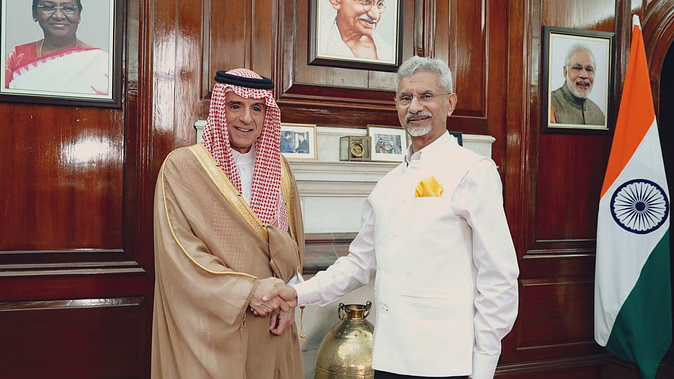
On Thursday, Saudi Arabia’s Minister of State for Foreign Affairs, Adel Al-Jubeir, arrived in Delhi on a sudden and unscheduled visit. His arrival is being widely interpreted as a diplomatic effort to ease the growing hostility between India and Pakistan. During his visit, Al-Jubeir held a significant meeting with India’s External Affairs Minister, Dr. S. Jaishankar, in which the two leaders discussed regional stability and the importance of firmly countering terrorism.
Dr. Jaishankar shared details of the meeting on social media, stating, “Had a good discussion this morning with Saudi Arabia’s Minister of State for Foreign Affairs, Adel Al-Jubeir. We exchanged views on the situation in the region and emphasized India’s firm commitment to combat terrorism.”
Adding to this wave of diplomatic outreach, Iran’s Deputy Foreign Minister Abbas Araghchi also arrived in New Delhi, landing just after midnight on Wednesday. Araghchi is scheduled to meet with Dr. Jaishankar later today, and will also call on President Droupadi Murmu in the afternoon. Iran’s engagement is seen as part of broader regional efforts to prevent the situation from spiraling further.
Background: Operation Sindoor and Its Aftermath
The diplomatic flurry follows Operation Sindoor, a precision military operation carried out by the Indian Armed Forces on Wednesday morning. In response to a deadly terror attack in Pahalgam, India launched missile strikes targeting nine terrorist camps inside Pakistani territory. These camps were reportedly associated with banned terror groups such as Jaish-e-Mohammed, Lashkar-e-Taiba, and Hizbul Mujahideen.
The strikes were conducted in multiple locations, including Bahawalpur, Muzaffarabad, Muridke, and Sialkot, and are believed to have resulted in significant terrorist casualties. While India has characterized the action as a counter-terrorism measure, Pakistan has reacted strongly and has threatened retaliatory action, raising alarm about the potential for open conflict.
Global Calls for Restraint
In the wake of these developments, several countries and international organizations have urged both India and Pakistan to exercise restraint and avoid further escalation. The surprise visits by Saudi and Iranian diplomats are viewed as part of a coordinated international effort to mediate tensions and restore regional peace.
As the world watches the unfolding events with concern, the coming days will be crucial in determining whether diplomacy can prevail and prevent another confrontation between the two countries.