
Epstein Files Controversy Intensifies: Democrats Criticize DOJ, Claim Federal Law Violations
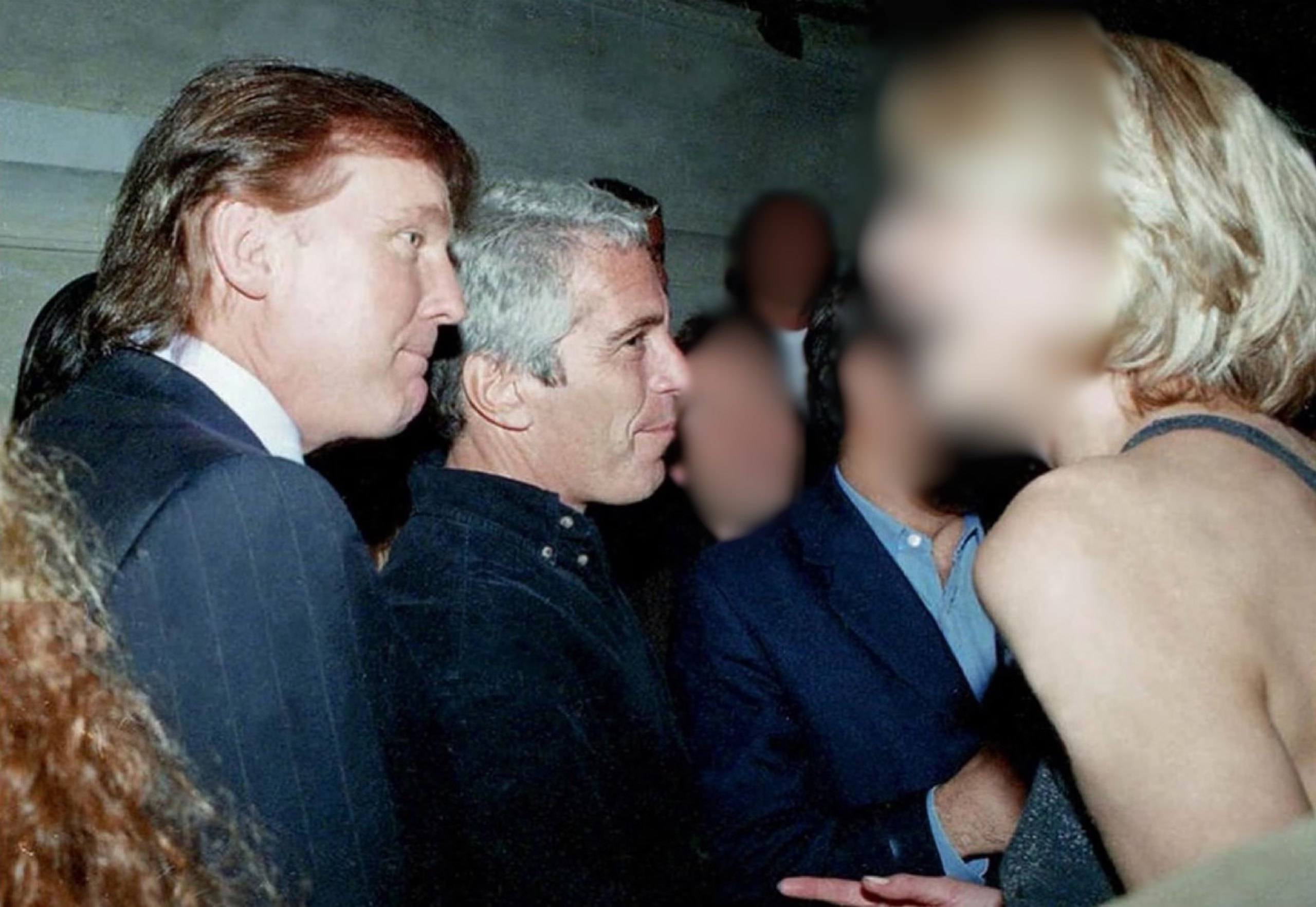
The release of the long-awaited Jeffrey Epstein files has sparked a major political controversy in the United States, with Democratic lawmakers accusing the Department of Justice (DOJ) and the Trump administration of violating federal law. The backlash comes in response to the heavily redacted documents related to Epstein’s infamous sex trafficking case, which many say obscure crucial information that should have been made public.
Senior Democratic leaders in Congress, including Robert Garcia and Jamie Raskin of the House Oversight and Judiciary Committees, have expressed serious concerns over what they see as deliberate concealment of critical information. According to them, the released files, heavily blacked out in many sections, fail to comply with the Epstein Files Transparency Act—a law that mandates all non-classified documents be disclosed to the public within 30 days.
Democratic Congressman Ro Khanna also criticized the release, highlighting that the 119 pages of grand jury testimony made public on Friday were almost entirely redacted. In a statement on social media platform X, he called the move a clear violation of federal law and suggested that Congress and other authorities are exploring potential legal remedies. Lawmakers argue that such extreme redactions not only violate legal requirements but also undermine public trust and deny victims the transparency and accountability they deserve.
The Department of Justice, however, maintains that its review of the Epstein case found no concrete evidence that Epstein blackmailed any high-profile individuals or that new criminal investigations are warranted. Deputy Attorney General Todd Blanche, in a letter to Congress, emphasized that there is currently no basis for pursuing additional charges. The DOJ also cited the logistical challenges of releasing the documents quickly, which may have contributed to inconsistencies in the redacted content.
Despite the DOJ’s claims, several discrepancies in the files have already drawn attention. CNN reports that some photographs initially blacked out later appeared unredacted, including images linked to a lavish property outside Paris, France. Critics say these inconsistencies raise questions about the transparency and integrity of the document release.
The Epstein case has previously involved the release of photos and information implicating notable figures such as former President Bill Clinton and pop star Michael Jackson, among others. Democratic leaders argue that the combination of heavy redactions, inconsistent releases, and incomplete information points to an intentional effort to conceal the full scope of Epstein’s network and activities.
As the debate intensifies, questions remain about what further actions Congress and other authorities might take to ensure full disclosure. Democratic lawmakers insist that justice for Epstein’s victims and public accountability must not be compromised, while the DOJ continues to defend its handling of the sensitive material. The controversy surrounding the Epstein files highlights the ongoing struggle between transparency, legal limitations, and political interests in one of the most high-profile cases in recent American history.
News Source: Amar ujala