
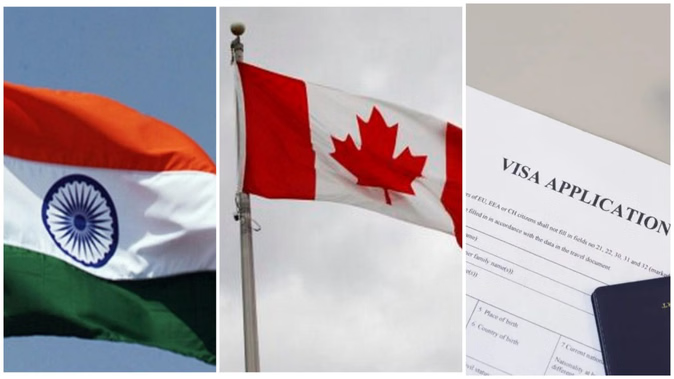
Canada Faces Sharp Decline in Indian Student Applications and Rising Visa Rejections
Canada is witnessing a significant decline in the number of Indian student visa applications and approvals. Once considered a dream destination for higher education, Canada is now facing questions — is this drop due to stricter immigration policies, political tension, or rising concerns about fraudulent applications?
A Decade-Long Trend Takes a Turn
For more than a decade, Canada stood as one of the most popular destinations for Indian students, known for its quality education, post-study work opportunities, and multicultural environment. However, the scenario has changed drastically. Recent data reveals that both the number of applications and acceptance rates from Indian students are falling steeply — a worrying sign for both students and educational institutions.
Decline in Visa Approvals: The Numbers Speak
According to Reuters, the Canadian government has tightened its student visa process for the second consecutive year starting in 2025. The move aims to curb temporary migration and prevent misuse of the study visa system. In August 2025, nearly 74% of visa applications from Indian students were rejected, compared to around 32% rejection in the same period a year earlier.
This means that while only one out of three applications was denied previously, now three out of every four Indian students are facing rejections. The total number of Indian applicants also fell sharply — from 20,900 in August 2023 to just 4,515 in August 2025, a staggering fivefold decrease.
On the other hand, the overall study visa rejection rate across all nationalities was 40%, with Chinese students facing only a 24% rejection rate.
Political Tensions Add to the Pressure
The decline in Indian student numbers has also been linked to the strained diplomatic relations between India and Canada. The rift deepened in 2023 when then-Prime Minister Justin Trudeau accused India of involvement in the killing of a Canadian citizen, a claim strongly denied by India. Since then, the political climate between the two nations has remained tense, indirectly affecting student mobility and immigration trust.
Rising Fraud Cases and Policy Tightening
Another major reason behind the crackdown is the discovery of fraudulent visa applications. In 2023, Canadian authorities uncovered around 1,550 study visa applications supported by fake university acceptance letters — most of them traced back to India.
Following this scandal, Canada tightened its visa screening process, increased the financial eligibility requirement, and implemented new verification measures. Reports indicate that in 2024 alone, over 14,000 suspicious applications were flagged by the new verification system.
India’s Response and Diplomatic Stance
The Indian Embassy in Ottawa has acknowledged the growing rate of visa rejections but emphasized that the issuance of visas lies solely within Canadian jurisdiction. The Embassy reiterated that Indian students are among the brightest in the world and have significantly contributed to Canadian academia and research.
Canadian Foreign Minister Anita Anand, in an interview with Reuters, stated that while the government aims to preserve the integrity of its immigration system, it also recognizes the importance of maintaining the flow of Indian students who bring both talent and economic value to the country.
How Canada Has Tightened Its Screening
Education consultants report that the visa process has become much more demanding. Financial scrutiny is now deeper than ever — students are not only required to show bank balances but must also provide proof of the source of their funds. According to Michael Pietrocarlo, co-founder of Border Pass, “the level of documentation now required is unprecedented — even small discrepancies can lead to rejections.”
Additionally, CBC News reported that Ottawa is seeking new powers to revoke clusters of temporary visas, particularly from India and Bangladesh, to tackle fraud. This measure, part of the Bill C-12 proposal, aligns with broader border control legislation introduced as Bill C-2 in Parliament.
Hopes for Better Relations Ahead
Despite the challenges, efforts are being made to restore trust and cooperation. During the G7 Summit in June 2025, Indian Prime Minister Narendra Modi and Canadian Prime Minister Mark Carney met to discuss bilateral ties, including education and immigration issues. Both nations have since appointed new High Commissioners to strengthen diplomatic engagement and foster people-to-people connections.
Conclusion
Canada’s stricter student visa policies, combined with political tension and fraud concerns, have led to a dramatic fall in Indian student applications. While the country remains a sought-after education hub, these new challenges have reshaped the outlook for thousands of Indian aspirants. The coming months will reveal whether diplomatic efforts and policy reforms can rebuild the trust that once made Canada a top destination for Indian students.