
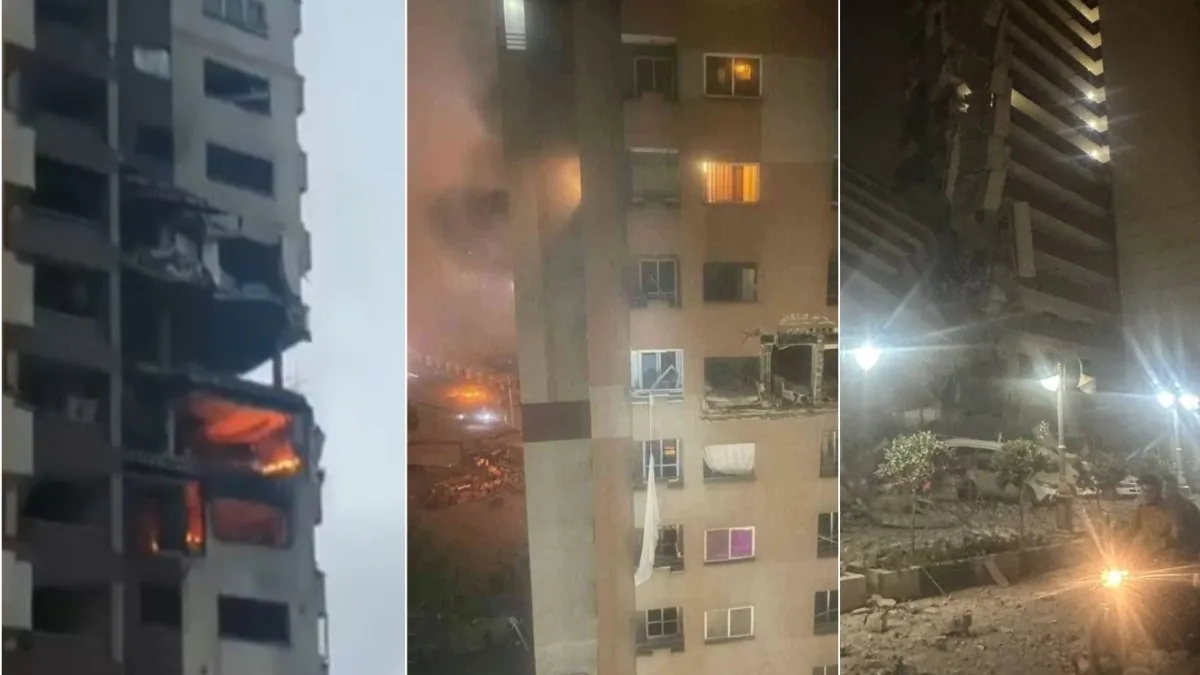
Israel’s Covert Strike Inside Iran: Smuggled Weapons Used in Surprise Attack, Iran Appoints New Military Commanders
Israel-Iran Tensions Escalate After Secret Internal Assault Targets Missile Base Near Tehran
In a bold and covert military operation, Israel reportedly launched a surprise strike inside Iran using weapons and drones that had been secretly smuggled into the country well in advance. According to two Israeli security officials, who spoke on condition of anonymity, the attack was part of a long-planned effort to weaken Iran’s air defense systems and target its missile capabilities from within its own borders.
Weapons Smuggled and Activated Internally
The Israeli intelligence agency Mossad is believed to have orchestrated the infiltration of drones, explosives, and precision-guided weapons into Iranian territory. These arms were quietly positioned within Iran and later activated from hidden locations as part of Friday’s coordinated assault. The main target, according to sources, was a major Iranian missile base situated near the capital city of Tehran.
In an unprecedented move, the explosive drones were launched from within Iran itself. In addition, some of the advanced weapon systems were concealed in civilian vehicles and deployed at a strategically selected time, creating maximum disruption. The goal, officials claim, was to cripple Iran’s radar and missile defense installations ahead of a larger confrontation.
Iran Responds with New Military Appointments
The attack reportedly led to the deaths of at least two senior Iranian military officers. In response, Iran’s Supreme Leader Ayatollah Ali Khamenei acted swiftly to reinforce the military command structure. General Abdurrahim Mousavi, previously serving as the chief of the Iranian Army, was promoted to head the entire Iranian Armed Forces. Meanwhile, Mohammad Pakpur was appointed as the new commander of the Islamic Revolutionary Guard Corps (IRGC), replacing General Hossein Salami.
The IRGC, formed after Iran’s 1979 Islamic Revolution, remains one of the most powerful military institutions in the country and plays a central role in national defense and regional power projection. The leadership change signifies a rapid restructuring within Iran’s military in response to the recent covert strike.
Tensions Soar Amid Covert Warfare
Neither Iran nor Israel has issued an official statement confirming the operation, but reports from international media outlets and security analysts suggest that this was a unique form of warfare — one conducted from inside the target country, relying on deep intelligence operations and local activation of weapon systems.
The current situation in the Middle East remains highly volatile. Analysts warn that the strike represents a serious escalation in the Israel-Iran conflict, which has simmered for years through proxy wars, cyberattacks, and regional skirmishes. However, this direct and internalized method of assault marks a significant shift in the way such conflicts are waged.
Global Concerns Over Escalation
The world is now watching closely for Iran’s next move. With its military leadership reshuffled and its defense systems shaken, Tehran may choose to retaliate either overtly or through asymmetric means, such as cyberwarfare or regional proxies like Hezbollah.
If the conflict deepens further, security experts caution that the consequences could extend far beyond the two countries involved. The stability of the broader Middle East — already beset with conflicts in Syria, Lebanon, and Yemen — could be threatened, drawing in global powers and further destabilizing the region.
For now, the Israel-Iran conflict has entered a new and highly dangerous chapter, one where war may no longer come only from the skies, but from within.